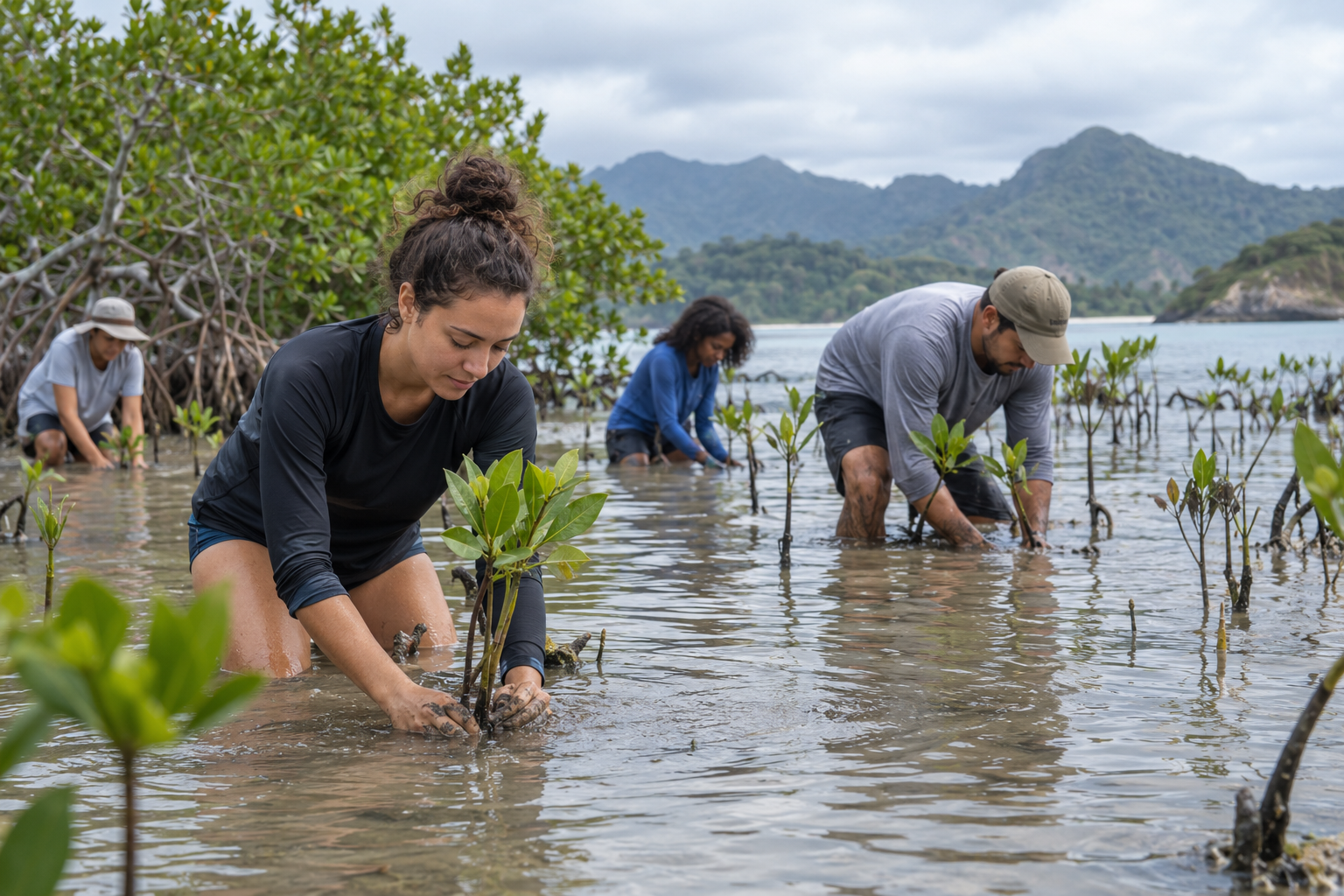
Mangrove Restoration Brings Coastal Communities New Protection
Mangroves grow where land and sea meet, forming dense coastal forests adapted to salt water and changing tides. Their roots slow waves, trap sediment, and provide shelter for young fish and other wildlife. Where mangroves have been removed for construction, fuel, or poorly planned aquaculture, communities may face faster erosion and weaker natural protection. Restoration is increasingly used to repair these valuable coastal systems.
Planting begins with understanding the coast
A successful project does not start by placing seedlings in any available mud. Teams first study tides, water flow, sediment, salinity, and the species that historically grew in the area. In some locations, natural recovery begins once a blocked channel is reopened or damaging activity stops. Planting is useful when seed sources are distant or the site needs additional support.
Using appropriate native species matters because different mangroves occupy different parts of the tidal zone. A seedling placed at the wrong elevation may be flooded too often or not often enough. Local fishers and residents often hold detailed knowledge about earlier shorelines, storm patterns, and water movement. Their observations can improve technical surveys and prevent expensive mistakes.
Communities need a lasting role
Short projects sometimes count the number of seedlings planted and end before survival can be measured. Real restoration requires monitoring through storms, dry periods, grazing, and human disturbance. Community teams can replace damaged markers, record growth, remove waste, and report changes in water flow. Paying people for this skilled work recognizes that stewardship requires time.
Clear land rights and shared rules are also essential. Residents need to know who can fish, collect materials, use access paths, or manage nearby development. If restoration restricts livelihoods without offering alternatives or participation, support will disappear. Projects are stronger when benefits such as improved fisheries, training, or ecotourism remain locally accessible.
Protection grows over time
Mangroves cannot eliminate every coastal risk, and they should not be used to justify unsafe building. They work best as part of wider planning that includes early-warning systems, safe evacuation routes, and limits on development in highly exposed areas. Their protective value increases as roots spread and forests mature.
Long-term measurement should include shoreline change, seedling survival, wildlife, water quality, and community use. When restoration follows coastal science and local leadership, it becomes more than a planting event. It rebuilds a living system that can support food, biodiversity, and protection for many years.
Regular public reporting keeps the project accountable and helps neighboring communities learn from both successful methods and avoidable failures.