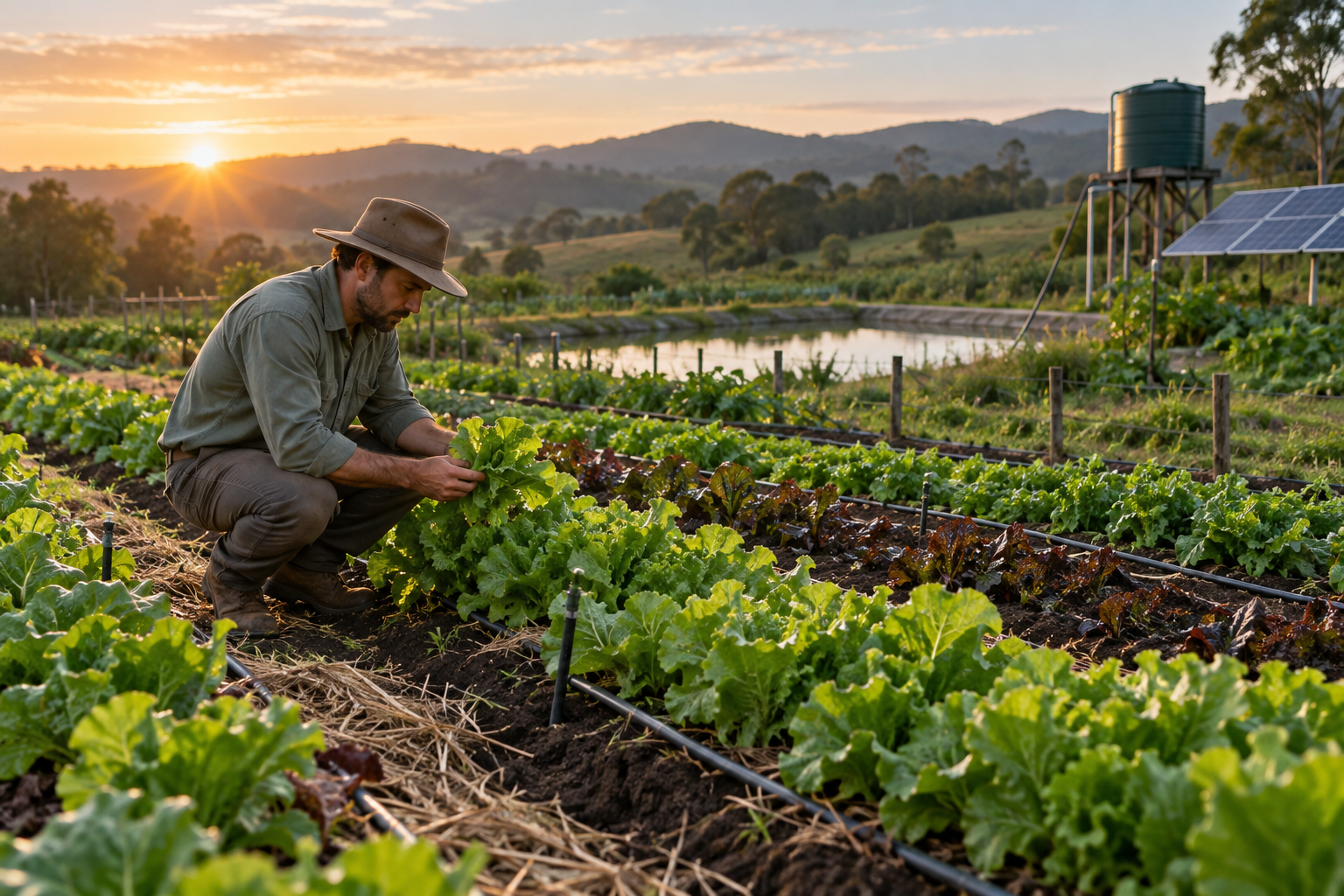
Regenerative Farms Use Water and Soil More Carefully
Farmers facing irregular rainfall, higher input costs, and tired soils are looking for ways to make production more resilient. Regenerative agriculture is one broad term used for practices that rebuild soil health while maintaining a working farm. It is not a single recipe. The right methods depend on climate, crops, land history, equipment, and the knowledge of the people managing each field.
Healthy soil manages water better
Soil rich in organic matter can absorb rain more effectively and hold moisture for longer periods. Cover crops protect the surface between harvests, while compost and crop residue return useful material to the ground. Reduced tillage can help preserve soil structure and the networks of roots, fungi, and organisms beneath it. These changes develop gradually, so farmers often test them on limited areas before expanding.
Good water management also requires accurate observation. Drip irrigation delivers water close to roots, but it must be maintained and adjusted for weather and plant growth. Moisture sensors can support decisions when they are affordable and correctly placed. Simple field checks remain valuable because technology cannot replace direct knowledge of soil texture, drainage, and crop condition.
Diversity reduces dependence
Rotating crops interrupts some pest and disease cycles and prevents the same nutrients from being removed year after year. Trees, hedges, or flower strips can provide habitat for pollinators and beneficial insects. Livestock may contribute manure and help manage vegetation when grazing intensity is carefully controlled. Diversity spreads risk, although it can also require new skills, markets, and equipment.
Farmers need realistic financial planning during a transition. Some benefits take several seasons to appear, while seeds, fencing, or irrigation upgrades create immediate costs. Demonstration farms, cooperative purchasing, technical advice, and flexible lending can reduce that pressure. Buyers can help by offering stable contracts rather than demanding environmental improvements without sharing the risk.
Measuring progress honestly
Claims about regeneration should be supported by evidence. Farms can track soil cover, organic matter, water use, erosion, crop yields, input costs, and biodiversity indicators. Comparing results over time is more useful than relying on a single label. Records also help farmers identify which practices work under their particular conditions.
Regenerative farming is best understood as continuous management rather than a final certification. Careful experiments, local knowledge, and transparent measurement allow farms to improve without promising instant transformation. When soil and water are treated as long-term assets, resilience becomes part of everyday production decisions.