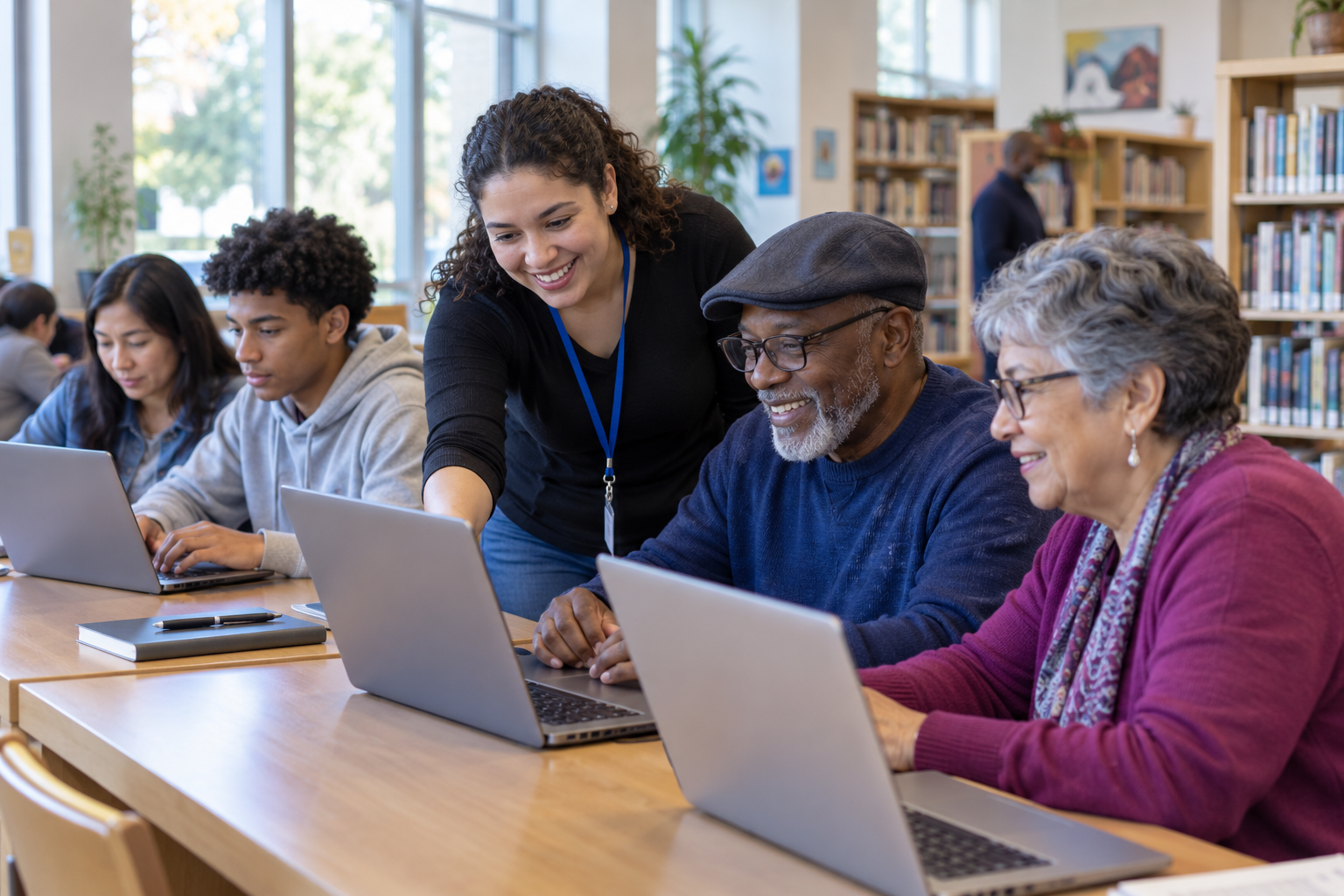
Public Libraries Become Gateways to Digital Confidence
Access to a computer or smartphone does not automatically create digital confidence. Many people can send messages and browse familiar websites but struggle with online forms, file management, privacy settings, video appointments, or job applications. Public libraries are responding with practical learning programs that combine free technology access with patient, face-to-face guidance.
Learning begins with real tasks
The most useful classes focus on goals that matter immediately. A participant may need to create an email account, attach a document, book a medical appointment, compare utility bills, or prepare a résumé. Working through a real task gives the lesson a clear purpose and helps the learner remember each step. Small groups also allow instructors to adapt the pace without making anyone feel left behind.
Digital support is not limited to beginners. Workers may need help using collaboration platforms, spreadsheets, or online training systems. Parents want to understand school portals. Older residents may be learning how to recognize scams or control what information an app collects. Libraries can offer short sessions for these specific needs instead of expecting everyone to complete the same broad course.
Trust makes libraries effective guides
Libraries are familiar public spaces that do not require customers to buy anything. That neutrality matters when people feel embarrassed about their skills or worried about sharing personal information. Staff can explain privacy principles without asking to see passwords or take control of sensitive accounts. Clear boundaries teach users how to protect themselves while still receiving help.
Equipment also needs thoughtful design. Adjustable desks, large-print keyboards, screen readers, headphones, and quiet areas make learning more accessible. Reliable internet and enough time on shared computers are basic requirements. Loan programs for laptops or mobile hotspots can extend access beyond the building.
Confidence grows through continued practice
One workshop rarely solves every problem. Drop-in help desks, printed guides, peer volunteers, and follow-up sessions allow learners to return when a new task appears. Partnerships with schools, employment services, and community organizations help libraries identify the skills residents need most.
Success should be measured by independence, not simply attendance. A learner who can submit a form, identify a suspicious message, or join an online class without assistance has gained something meaningful. By connecting technology with trusted human support, public libraries turn digital access into practical participation in modern life.
Programs improve further when learners help shape future topics. Their questions show which public systems are confusing, which devices are difficult to use, and where clearer instructions are urgently needed.