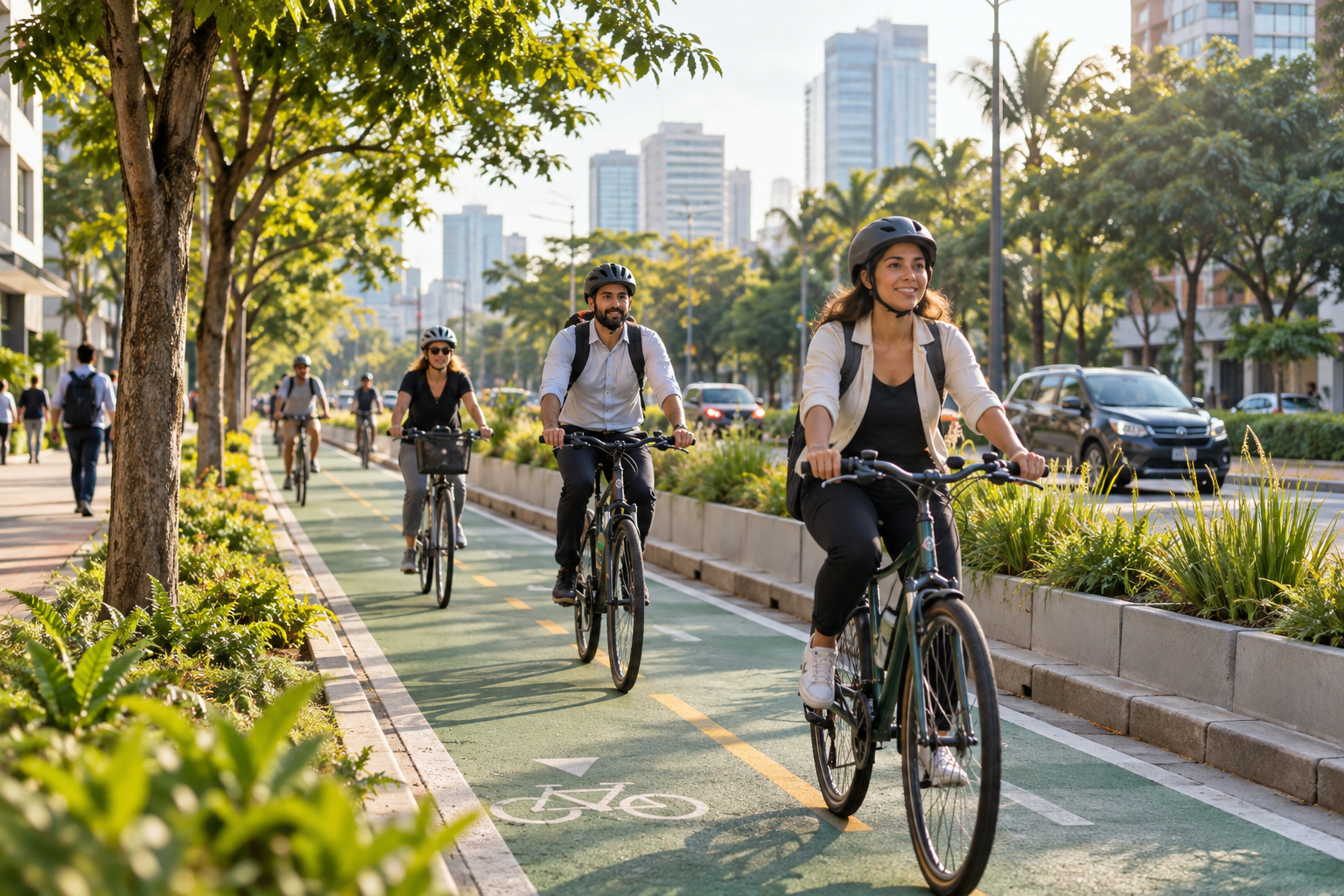
Protected Bike Lanes Make Daily City Travel Healthier
Cycling becomes a realistic form of daily transport when people feel protected from fast traffic. A painted line at the edge of a busy road may help experienced riders, but it rarely gives children, older adults, or new cyclists enough confidence. Cities are therefore building routes separated by curbs, planting, parked cars, or other physical barriers. These protected lanes are changing who can consider a bicycle for ordinary journeys.
Networks matter more than isolated lanes
A short protected section is useful only if riders can reach it safely. Successful systems connect homes with schools, workplaces, shops, parks, and public transport. They continue through intersections, where many collisions occur, and provide clear space around bus stops and loading zones. Wayfinding should be simple enough that a person can follow a route without repeatedly checking a phone.
Maintenance is equally important. Broken pavement, standing water, construction materials, and poorly trimmed plants can force riders into traffic. Snow, leaves, or sand need regular removal where local conditions require it. A protected lane should be treated as transport infrastructure, not as a decorative project completed on opening day.
Health and mobility benefits
Regular cycling adds physical activity to routines that people already need to complete. A short ride to work or a station can be easier to maintain than a separate exercise schedule. More cycling can also reduce noise and local air pollution when it replaces car trips. The benefits extend to people who never ride because streets with slower traffic and clearer crossings are often safer for pedestrians.
Access must remain central to planning. Affordable bicycle programs, secure parking, adaptive cycles, and connections to lower-income neighborhoods help ensure that investment serves more than a small group. Public consultation should include delivery workers, disabled residents, parents, transit users, and nearby businesses.
Designing streets for everyday choices
Good projects are evaluated after construction. Cities can measure ridership, crashes, travel times, business activity, and public feedback. If a junction remains confusing, the design should be adjusted rather than defended simply because it is new. Temporary barriers and pilot routes can reveal problems before permanent work begins.
Protected bike lanes do not require everyone to stop driving. They give residents another dependable option for short and medium journeys. When routes form a connected network and receive proper maintenance, cycling becomes less of a sporting activity and more of an ordinary, healthy way to move through the city.