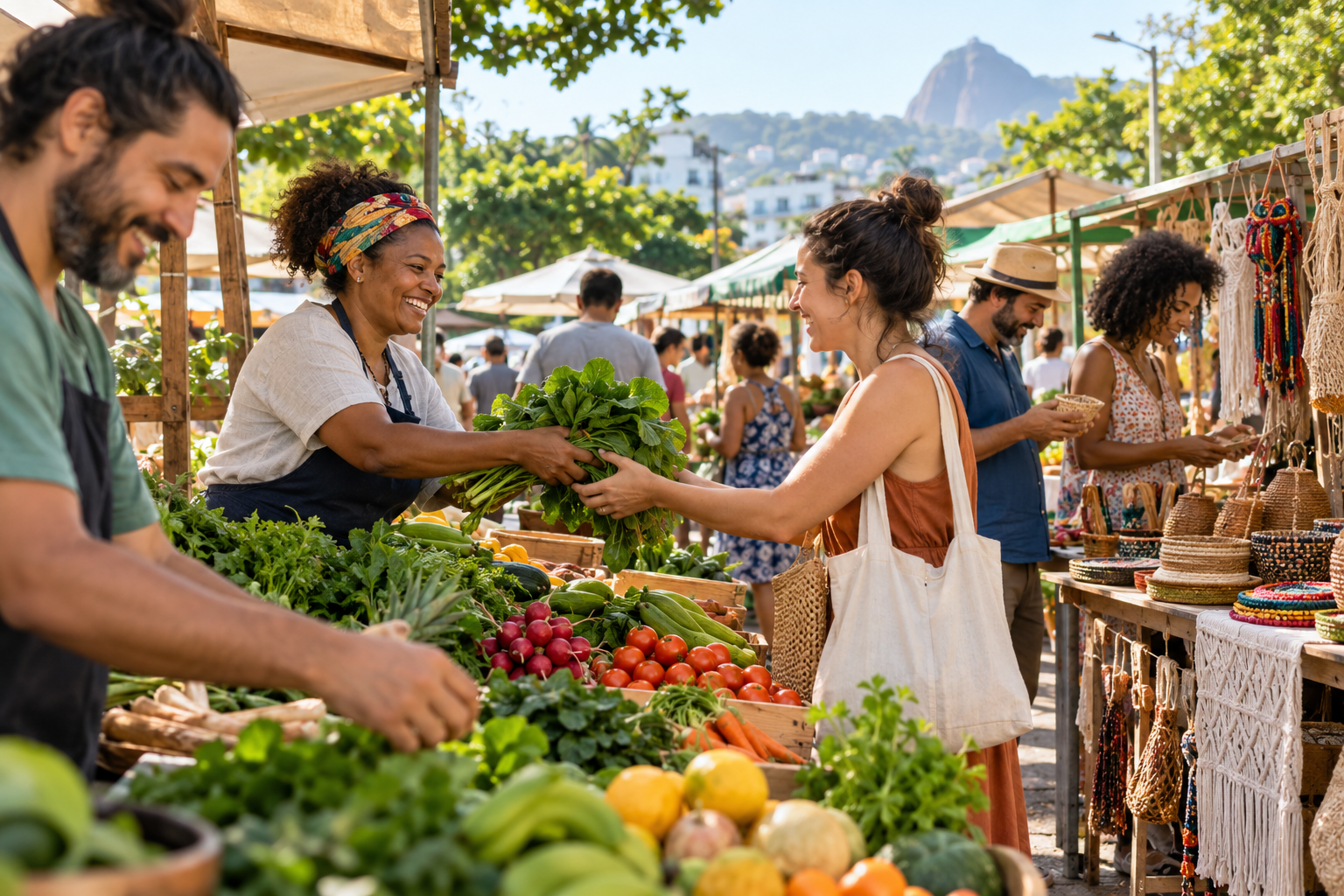
Neighborhood Markets Create More Resilient Local Economies
Neighborhood markets do more than provide a place to buy vegetables, bread, crafts, or household goods. They create direct relationships between residents and small producers, giving money more opportunities to circulate within the local economy. A market can also serve as a low-cost starting point for a new business, allowing a vendor to test products and learn what customers value before taking on the expense of a permanent shop.
Small transactions build wider stability
Independent vendors often purchase supplies, packaging, transport, and services from other nearby businesses. Their income supports local households and can be reinvested quickly. Customers benefit from personal advice, flexible quantities, and products suited to regional tastes. Farmers and makers receive immediate feedback, which helps them adjust quality and reduce waste.
This network becomes especially valuable during disruption. When a distant supply chain slows down, local producers may be able to respond more quickly. They cannot replace every large retailer, but they add diversity to the system. An economy with many small suppliers has more ways to adapt than one dependent on a single source.
Good management keeps markets accessible
A successful market requires more than an open square. Organizers need transparent fees, fair stall allocation, clean water, waste collection, shade, toilets, safe electrical connections, and accessible walking routes. Clear opening hours and simple public transport information make visits easier. Digital payment options can help, but cash should remain available for people who do not use banking apps.
Vendor rules should protect quality without creating barriers that only larger businesses can meet. Training in food safety, bookkeeping, labeling, and customer service can improve standards while helping newcomers participate. Organizers can also reserve spaces for seasonal farmers, young entrepreneurs, and community groups.
A public place as well as a retail space
Markets strengthen social connection. Regular customers recognize vendors, neighbors exchange information, and newcomers learn about the area. Demonstrations, music, repair workshops, and children’s activities can add value when they do not interfere with basic trade. Partnerships with food banks or community kitchens can redirect safe unsold produce.
The strongest markets remain rooted in everyday needs. They avoid becoming expensive attractions that push out local shoppers and traders. By tracking vendor diversity, customer access, and the share of locally produced goods, organizers can protect that purpose. A well-run neighborhood market is both a practical service and a small piece of economic infrastructure built around trust.
Regular surveys of shoppers and traders can reveal simple improvements before small access problems become permanent barriers.